Yash
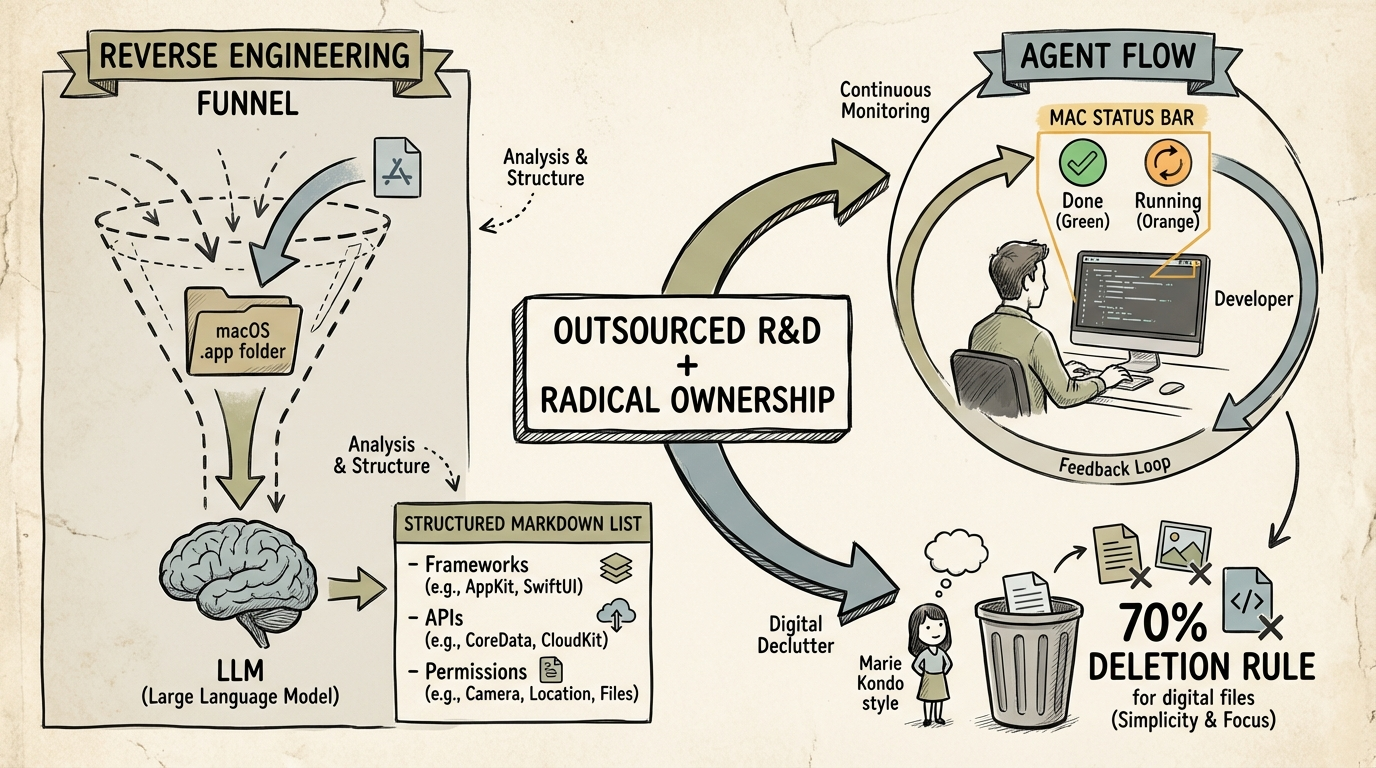
Reverse engineer the file structures and frameworks of top-tier macOS apps using LLMs to skip R&D and focus exclusively on unique user experience.
Key Insights
Reverse Engineering as Outsourced R&D
07:06:07Instead of prompting AI for general advice, feed it the actual file structure of successful apps to extract their specific tech stacks, frameworks, and API endpoints.
The 70% Deletion Rule for Organization
07:04:50Effective digital organization is 70% throwing things away; building systems to automatically purge low-value files (like screenshots) is more effective than sorting them.
Build vs. Buy Identification via Teardowns
07:17:22Use app teardowns to distinguish between a competitor's core proprietary tech and their outsourced components (e.g., ChatGPT using LiveKit for audio) to prioritize your own dev hours.
Maintaining State through Manual Code Review
07:21:58To avoid 'TikTokification' of code, developers must read every line of AI-generated code to maintain deep familiarity with the codebase for rapid debugging.
Systems
The App Teardown Workflow
- Locate the target .app file in the macOS Applications folder.
- Use Kevin Chen's reverse engineering blog post as a context prompt for an LLM.
- Provide the LLM with the app's internal file/folder structure.
- Instruct the LLM to extract frameworks, privacy permissions, and API endpoints into a .md file.
- Analyze the output to determine the '80/20' of the feature set.
Parallel Agent Management
- Initiate multiple Claude Code agents for different sub-tasks simultaneously.
- Use a status bar monitoring tool to track agent completion status (Green/Orange).
- Use the notification as a trigger to switch back from deep reading/reviewing to active management.
- Review every line of output to ensure it meets architectural standards.