Paula
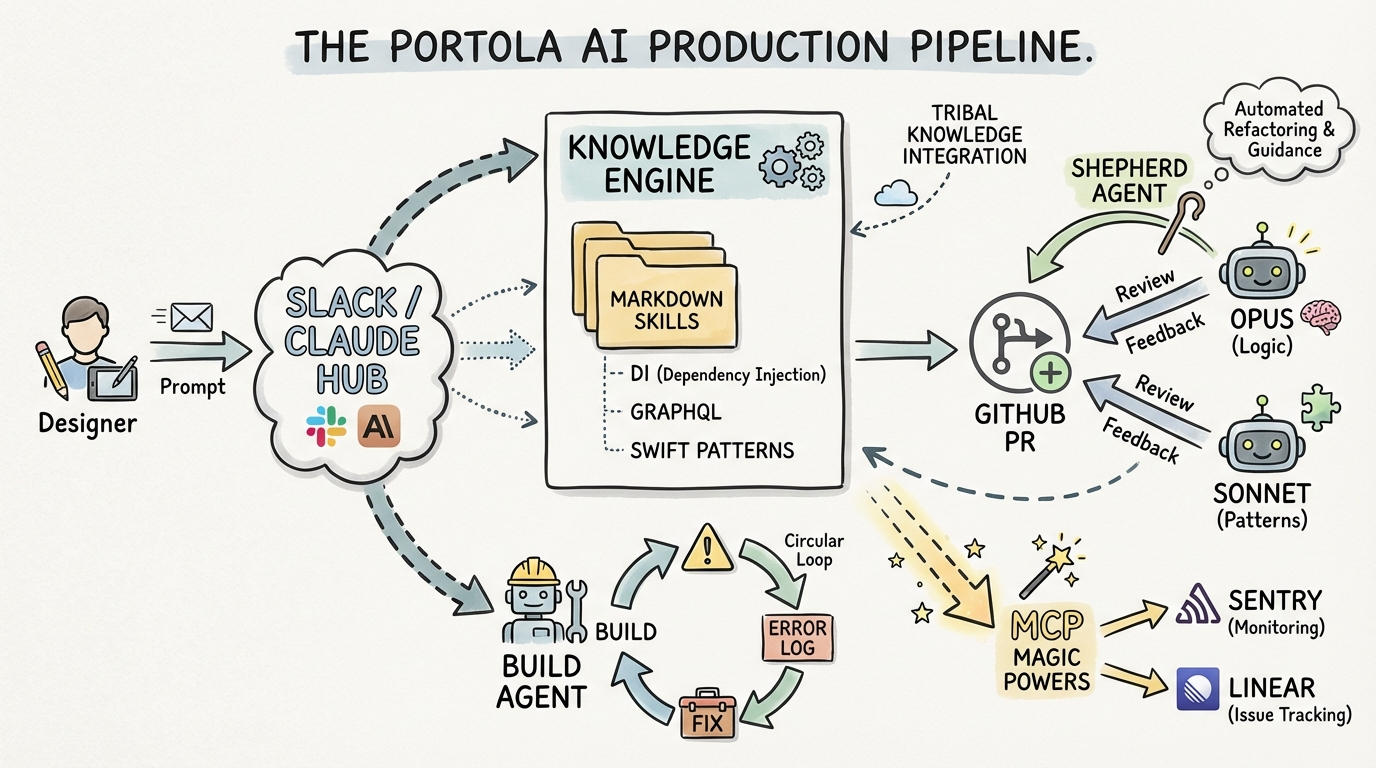
Transition from 'vibe coding' prototypes to production-grade engineering by treating LLMs as onboarded teammates through structured markdown 'skills,' automated build-and-fix agents, and multi-model review pipelines.
Key Insights
Physics-Aware UI via Asset Prompting
03:36:02Claude can generate complex SpriteKit animations by processing raw image assets and Figma screenshots; it successfully handles physics-based rotations and easing that often exceed the fidelity of the original design.
The 'Tribal Knowledge' Markdown Strategy
03:49:53Prevent generic, incompatible AI code by encoding architectural patterns (dependency injection, GraphQL conventions, specific Swift flavors) into markdown 'skills' files that act as a permanent onboarding manual for the LLM.
Multi-Model Tiered Review Pipelines
03:52:31Optimize review accuracy by assigning specific models to specialized agents: use Opus for high-level logic review and Sonnet for lower-level pattern and syntax consistency.
Non-Engineer Production Contributions
03:46:37By integrating Claude with Slack and GitHub, designers can open functional PRs; the system's pre-defined 'skills' and review agents ensure the code meets production standards before an engineer ever sees it.
Systems
The PR Shepherd Workflow
- Tag Claude in Slack with a task or Linear ticket link.
- Claude identifies the repo (iOS or Backend) and opens a PR.
- Logic Review Agent (Opus) and Pattern Review Agent (Sonnet) automatically comment on the PR.
- Shepherd Agent reads the comments, refactors the code, and re-commits until review bots are satisfied.
- Human engineer performs the final sanity check and merge.
The Build-Fix Loop Agent
- Configure an agent with access to the local or CI build environment.
- Agent triggers a build command after code generation.
- Agent captures the compiler error logs and stack traces.
- Logs are fed back to Claude to identify the specific line and logic failure.
- Claude iterates on the fix and re-triggers the build until success.